

Chris Law, UW Biology Acting Instructor and affiliate curator at the UW Burke Museum, was interviewed in a UW News Q&A about his new research, which suggests that two different climate transitions millions of years ago fueled the diversification of carnivoran body plans. The findings were published on December 16 in Proceedings of the Royal Society B.
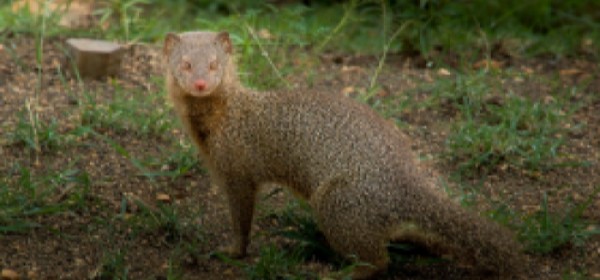
The ancestors of our furry cats and dogs once looked similar to today’s modern mongoose, a mammal with a long body and small, round ears. In fact, all members of the order Carnivora, which includes a variety of mammalian species, such as bears, wolves and even seals, evolved from these ‘mongoose-like’ creatures.
How did such a variety of body shapes emerge from one body type? New research led by the University of Washington suggests that two different climate transitions millions of years ago fueled this change.
The team, led by Chris Law, a UW principal research scientist in biology, studied the skeletal shapes of more than 850 carnivoran specimens held at 17 different natural history museums. The specimens include almost 200 different species of carnivorans: 118 that currently exist and 81 that are extinct.
The researchers found that the Eocene-Oligocene Transition, which took place around 34 million years ago, led to changes in body shape between different carnivoran families — such as between cats and dogs. Then the Mid-Miocene Climate Transition, which took place around 15 to 13 million years ago, led to changes within families — such as changes between canid species.
The team published these findings Dec. 16 in Proceedings of the Royal Society B.
UW News reached out to Law, who is also an affiliate curator at the UW Burke Museum of Natural History and Culture, to learn more about these results and what they mean for carnivorans today.
Can you talk about the significance of these results?
Chris Law: Major transitions in climate can lead to tremendous changes in biodiversity on Earth. Here, we found that climate and environmental transitions over the past 56 million years facilitated the diversification of modern carnivorans and their body forms.
Before these climate transitions, early carnivorous mammals occupied most niches as the top predators and therefore prevented the ancestors of modern carnivorans from exhibiting much body shape diversity. But climate transitions contributed to the extinction of these early carnivorous mammals, releasing the ancestors of modern carnivorans from these constraints and enabling them to exploit new environments and resources. Thus, climate transitions enabled the ancestors of modern carnivorans to increase their phenotypic diversity and fill these new niches. Our work shows how the radiation of carnivorans — and probably other animal groups — occurs in sequential evolutionary phases triggered by multiple climatic and environmental transitions.
What was happening climate-wise during the Eocene-Oligocene and the Mid-Miocene Climate transitions?
CL: The Eocene-Oligocene Transition, which lasted for about 500,000 years, was characterized by plummeting global temperatures and the appearance of the first Antarctic ice sheets. The Earth’s climate transitioned from a warm ‘greenhouse’ with relatively consistent temperatures to a cooler, temperate ‘icehouse’ with increased seasonality, all of which led to habitat transitions from warm humid forest to dry temperate forests interspersed with grasslands.
The Mid-Miocene Climate Transition, which lasted around 2 million years, can also be characterized as another major period of rapid temperature decline, increased aridity and enhanced seasonality, which in turn facilitated further trends toward grasslands from forest habitats.