
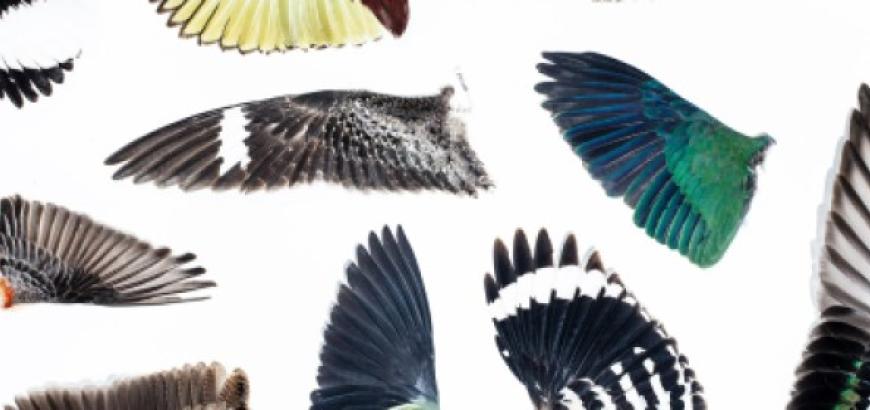
Sievert Rohwer, Biology Professor Emeritus and Curator Emeritus at the UW Burke Museum, and his son Vanya Gregor Rohwer, curator of birds and mammals at the Cornell University Museum of Vertebrates were featured in The New York Times on their work studying filoplumes. They believe that the filoplume - a tiny, hairlike feather on bird bodies - is a key player in the monitoring and maintenance of birds’ feathers, which keep them airborne.
Excerpt from The New York Times article:
Vanya Gregor Rohwer slid open a drawer to display the rich pink spread wing of a roseate spoonbill, one of thousands of mounted wings at the Cornell University Museum of Vertebrates.
He pulled up a long flight feather to expose, at its base, a palm-tree shaped feather so minuscule it could easily be missed. For a long time, this tiny feature called a filoplume was indeed obscure.
“The history of research on filoplumes is not super robust. They are kind of an overlooked feather,” said Dr. Rohwer, a curator of birds and mammals at the museum. “They were considered a degenerate feather or a useless feather, a relic.”
No longer. Dr. Rohwer and his father, Sievert Rohwer, an influential feather researcher and curator emeritus at the Burke Museum at the University of Washington in Seattle, believe that the tiny filoplume is a key player in the monitoring and maintenance of birds’ feathers, which keep them airborne.
Ever since feathers first appeared on dinosaurs around 150 million years ago, they have been evolving. Now there are six types of feathers on a bird’s body, including filoplumes, and all are made of keratin, a dead substance like human hair.
A paper published last year in the Journal of the Royal Society Interface described a feather as a masterpiece of engineering, one comprising nine orders of magnitude, from the nanoscale to the meter scale. Because the most sophisticated 3-D printers are limited to just four or five orders of magnitude, feathers have yet to be replicated.
“There is no manufacturing technology that can come close to a feather,” said David Lentink, one of the paper’s authors, who studies birds to find ways to improve robots at the University of Groningen in the Netherlands. “They are unusually sophisticated.”