
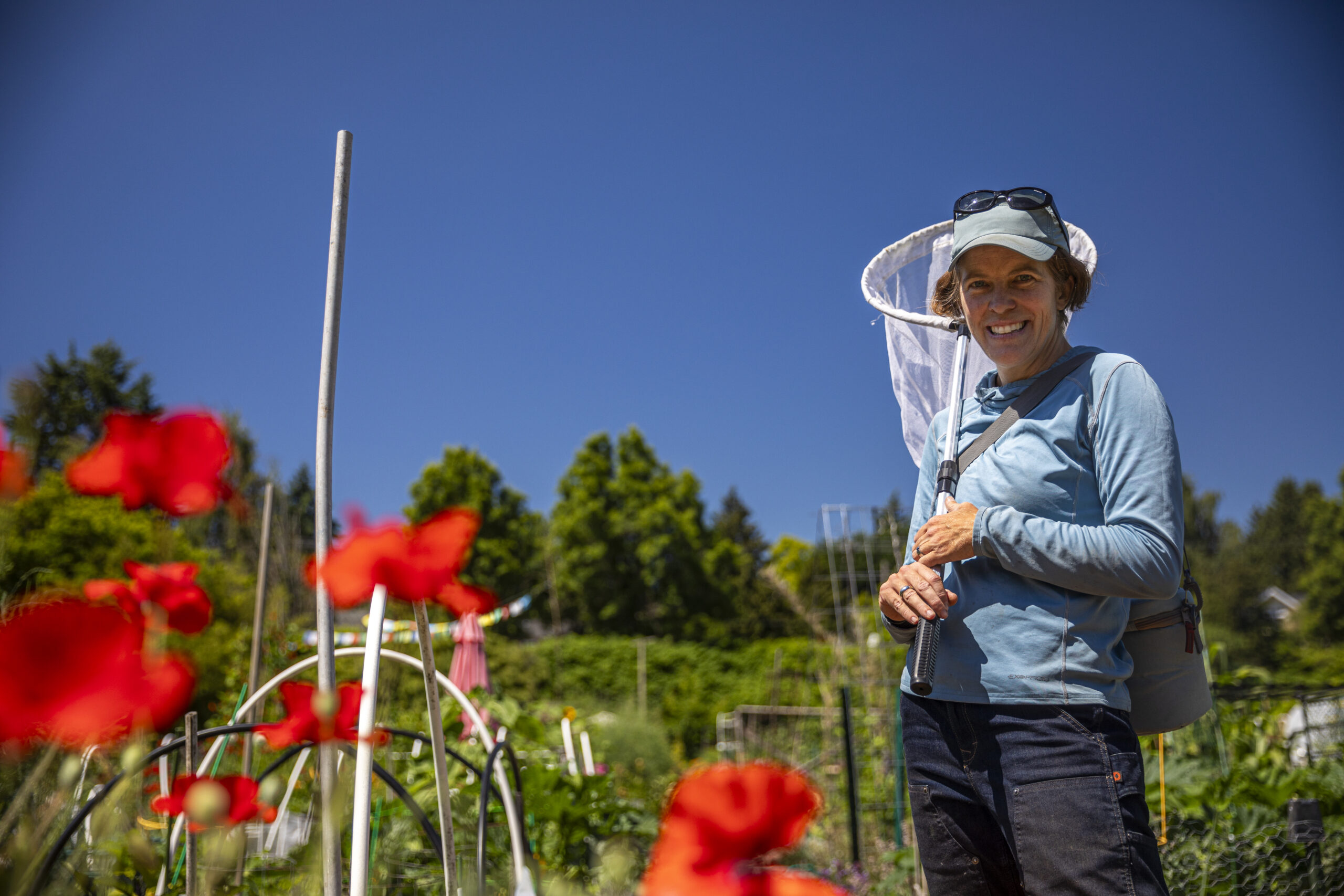
Lauren Buckley, Biology Professor, was interviewed by UW News on her research using "functional resurvey" experiments to answer questions about a variety of organisms, from bacteria to plants and animals. Repeating an experiment decades later allows researchers to learn about how environmental changes affect organisms.
Excerpt from the UW News Q&A with Lauren Buckley:
What are the benefits of repeating historical experiments?
Lauren Buckley: As environments shift, species are migrating, changing in abundance and interacting with new species in response. But we lack effective strategies to anticipate these changes and plan for impacts to agriculture, disease and biodiversity. Repeating historical experiments reveals the processes underlying biological responses and should allow us to improve our ability to predict what will happen in the future.
Are there any drawbacks involved in these experiments?
LB: Replicating methods based on the descriptions in published papers can be difficult. We also face challenges, such as working with poorly preserved data or specimens, or trying to control for other changes that have happened over time — for example, Seattle is drastically different than it was 25 years ago. Knowing the best time to repeat an experiment is also a challenge, but wait times can be surprisingly short for organisms with short life cycles, such as bacteria.
Our current work is uncovering evolutionary changes in Washington butterflies after 25 years. This research is made easier because we are collaborating with the original researcher, who is 25 years older than me. We joke that the undergraduate researchers, who are 25 years younger than me, are expected to repeat the study again in 25 years.
Read the full Q&A on UW News.