
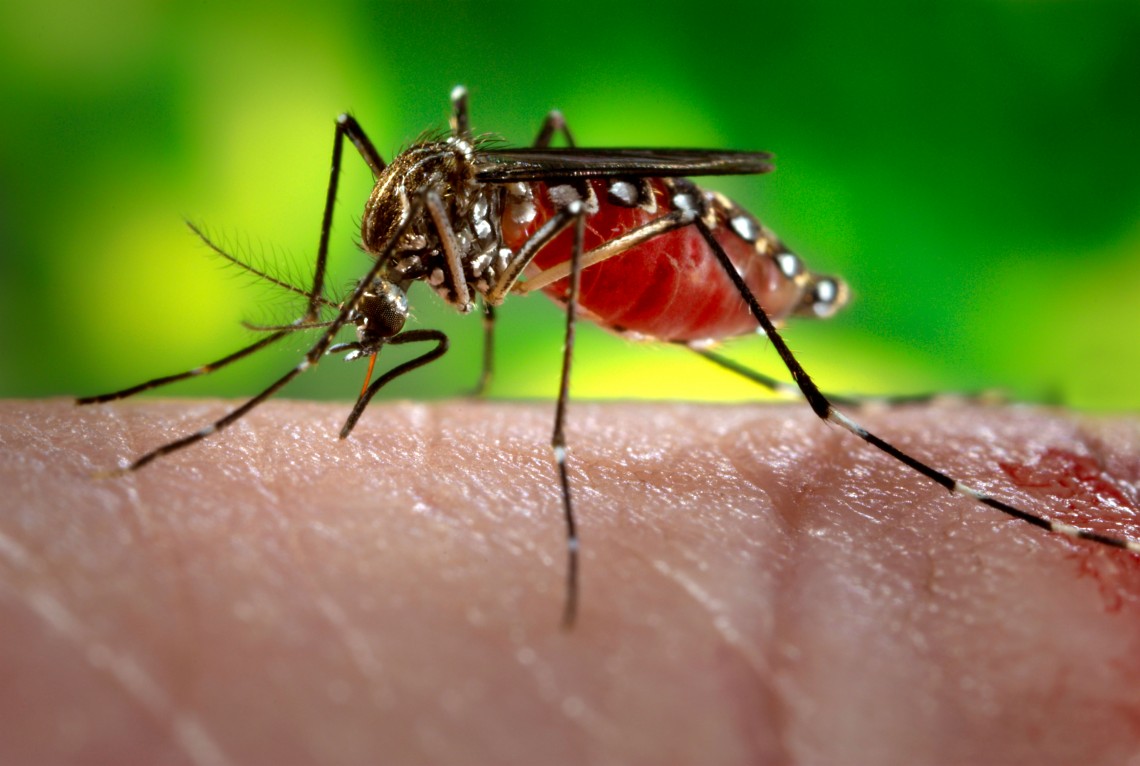
Mosquitoes are increasingly becoming resistant to current insecticides, leading to a pressing need for new methods to prevent mosquito bites — and the potential transmission of disease. New research by an international team, including Biology Professor Jeffrey Riffell, reveals that Aedes aegypti mosquitoes use a specific sensory receptor to detect and avoid borneol (pronounced "bor-nee-ohl"), an organic compound found in several aromatic plants, including camphor trees, rosemary and other aromatic herbs.
Excerpt from the UW News article:
Mosquito-borne diseases, such as dengue, malaria and Zika, cause more than 600,000 deaths worldwide per year. Mosquitoes are increasingly becoming resistant to current insecticides, leading to a pressing need for new methods to prevent mosquito bites — and the potential transmission of disease.
New research by an international team, including researchers at the University of Washington, provides insight into how an organic compound common in plant-based mosquito repellents affects mosquitoes. The study, published Feb. 20 in Nature Communications, reveals that Aedes aegypti mosquitoes use a specific sensory receptor to detect and avoid borneol (pronounced “bor-nee-ohl”), an organic compound found in several aromatic plants, including camphor trees, rosemary and other aromatic herbs.
“We were surprised by how sensitive the mosquitoes were to this repellent,” said co-author Jeffrey Riffell, a UW professor of biology. “By identifying the odorant receptor, we can now develop and test repellents that are even more effective than borneol, in that they last longer and are more repellent.”
The researchers discovered that Aedes aegypti mosquitoes, which are the major carrier of dengue and yellow fever viruses, have a single odor receptor, called OR49, that is highly tuned to detect borneol.
When a mosquito encounters this compound, OR49 activates a specific nerve cell in a mosquito’s maxillary palp, one of its primary organs for detecting odors and locating human hosts. That signal then travels from the nerve cell to a distinct region of the mosquito’s brain, triggering avoidance behavior.
Read the full article in UW News.