
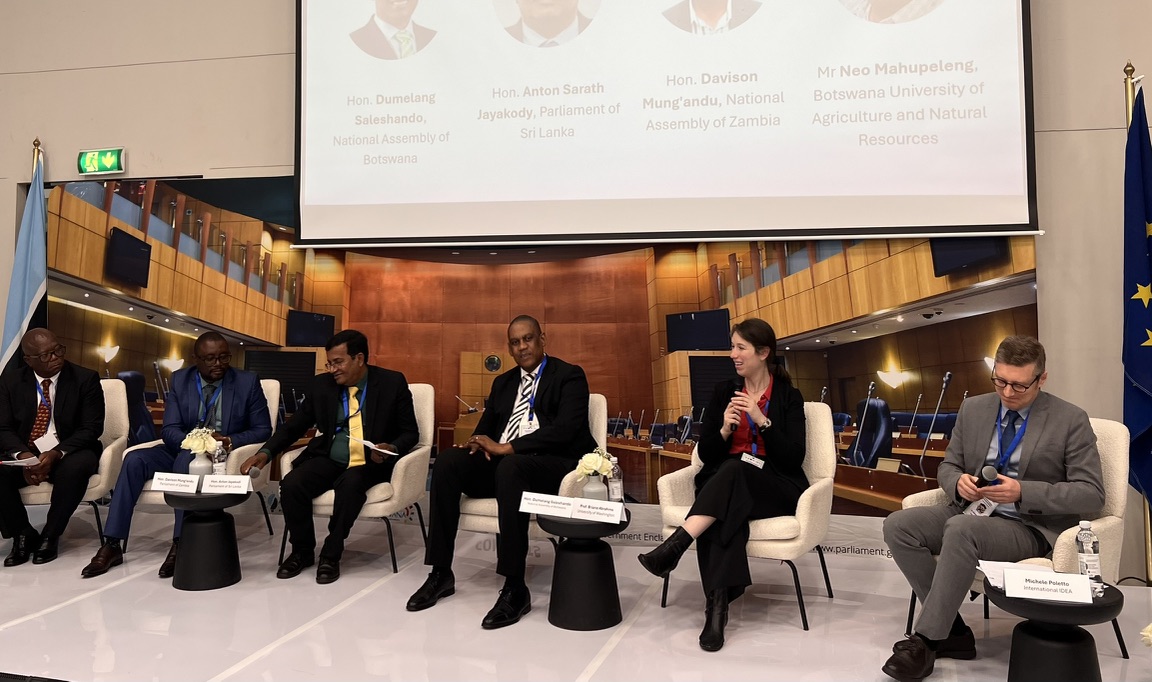
Biology Associate Professor Briana Abrahms gave the keynote speech at the International Parliamentary Roundtable on Human-Wildlife Coexistence held in Botswana in January. Abrahms offered a global perspective on how climate change is impacting human-wildlife conflict while also providing specific insight on southern Africa.
UW News posted a story about Abrahms's keynote speech and research:
Briana Abrahms once believed the focuses of her doctoral and postdoctoral work were completely different.
She completed her doctorate in Botswana, studying how humans were changing large carnivore behavior. After earning her degree, she researched whale migration at the National Ocean and Atmospheric Administration (NOAA). But while Abrahms was with NOAA, a historic heat wave off the West Coast was associated with an unprecedented rise in whales getting tangled in fishing gear. The event reminded her of studying in Botswana, when an extreme drought led to predators killing more livestock.
“It struck me as important that you have two really different systems, yet in both cases an extreme climate event led to a change in human-wildlife interactions,” said Abrahms, an associate professor of biology at the University of Washington.
Those experiences led Abrahms to study how climate change is affecting human-wildlife interactions and increasing conflict around the world — from polar bear attacks on people to elephant destruction of agricultural areas. Her areas of expertise made her the ideal choice for keynote speaker at the International Parliamentary Roundtable on Human-Wildlife Coexistence held in Botswana in January.
Abrahms offered a global perspective on how climate change is impacting human-wildlife conflict while also providing specific insight on southern Africa, since she has worked in Botswana since 2011. The roundtable was hosted by the National Assembly of Botswana in partnership with International IDEA through its Inter Pares – Parliaments in Partnership program.
“It was really gratifying,” Abrahms said. “As a scientist, we’re often putting papers out and not knowing what reach they will have. You never really know where they’re going to go, if they’re going to go anywhere. To be featured so prominently in this intergovernmental parliamentary workshop was a career highlight.”