
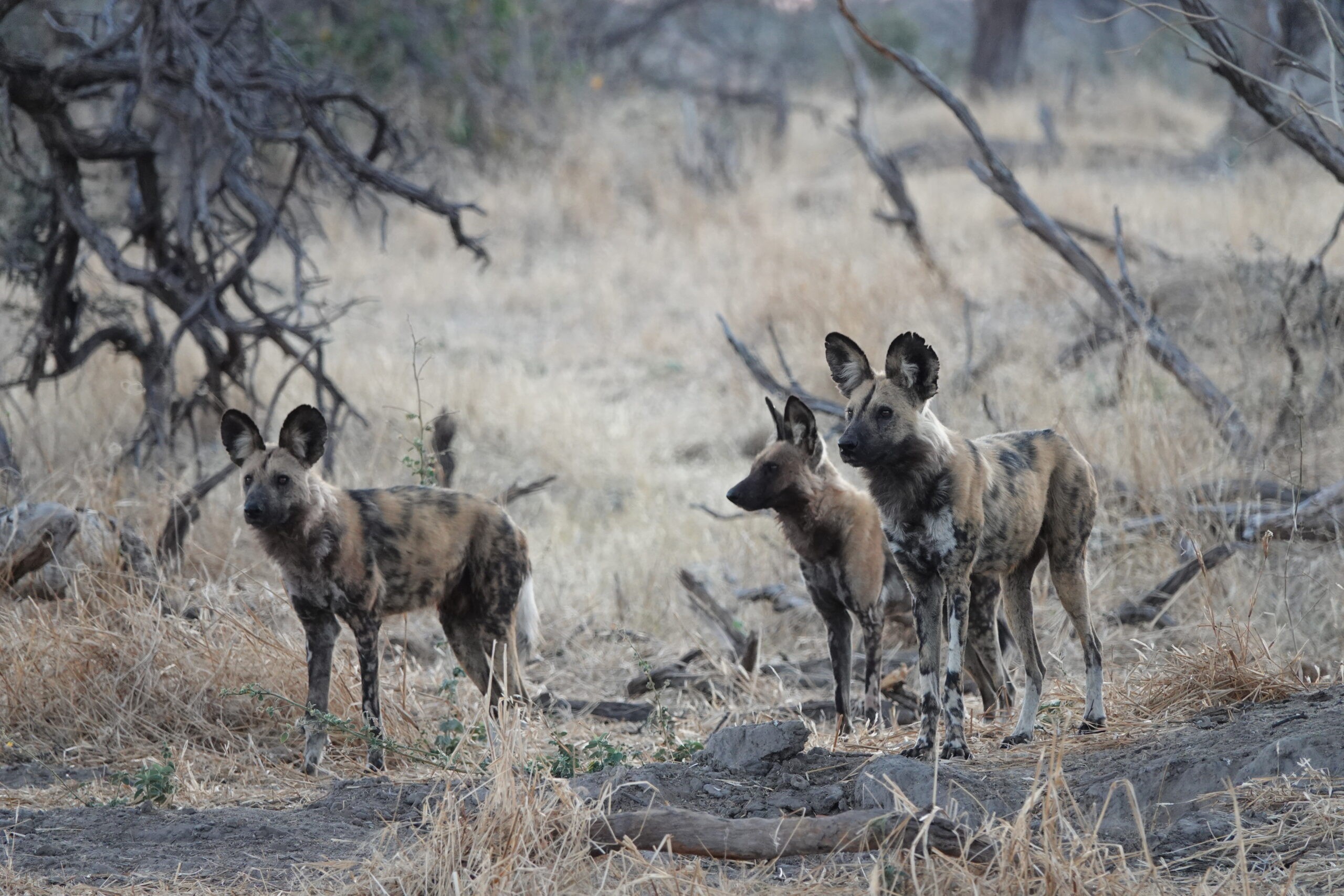
Kasim Rafiq, Biology research scientist, and Marie-Pier Poulin, Biology doctoral student, were recently interviewed by UW News about their upcoming field season in Botswana where they study how large predators, such as lions and African wild dogs, are affected by climate change and other shifts in their environment.
Excerpt from UW News Q&A:
Tell us about the trip. Where are you going?
Kasim Rafiq: Our team will be traveling to the fringes of the Okavango Delta. We have a long-standing partnership with Wild Entrust, which has been operating a long-term monitoring program there since the 1990s. As part of this program, Wild Entrust operates a remote bush camp that we work out of, which we affectionately call “Wild Dog Camp,” or “Dog Camp” for short. This is really just a collection of tents in the middle of the African bush, and everything is non-permanent, meaning it could be quickly taken apart.
The camp is located in an area managed by the local community for wildlife tourism, and it borders the Moremi Game Reserve. So, it’s a wild landscape with lots of wildlife and lush vegetation. There’s no fence around the camp, so it’s not uncommon for animals to wander through the camp day and night, including lions, elephants, leopards and various species of snakes.
Have you visited this site before?
KR: I first came to Dog Camp in 2013 as a research assistant and then I completed my master’s and doctoral research there studying leopards. For my doctoral project, I stayed at the camp for two years because leopards are pretty tricky to study. I’ve been back to Dog Camp every year since I joined the Abrahms Lab as a research scientist in 2021.
I feel very privileged to have been able to work with the people in camp for such a long period of time. It’s been special to see how the camp has developed over that period, and also to maintain relationships with the Botswana-based teams.
MP: I joined the Abrahms Lab in 2024 and spent time in the field that year to become familiar with the carnivores that we study. I returned in 2025 and I began to learn essential field skills, such as how to track and follow carnivores in the bush. I’m excited for my third visit to the field site this year.
How do you study these creatures?
KR: We use a combination of techniques. We directly watch these predators and use new conservation technologies to monitor animals year-round and during periods when it’s just not possible to follow them, such as when it’s too wet.
One key technology we use is wildlife tracking collars that use GPS sensors to let us see where the animals are going and accelerometers and microphones to let us know what they’re doing. We like to think of these collars as Fitbits for wildlife. Just like your fitness tracker helps you better understand your movement and your sleep, these collars allow us to get deep insights into an animal’s behavior.
Can you talk about some of the projects you’re working on?
MP: I’m looking at how social structure in wild dogs may influence how they respond to environmental change. Wild dogs live in tight-knit packs, just like grey wolves in North America. In each pack, usually only one lead pair has pups, while the rest of the pack — often aunts, uncles and older siblings — all work together to babysit, feed and protect the pups.
In my research, I am investigating how a pack’s “social profile,” such as its size, family ties and history, affects how the animals adjust their movement patterns during heatwaves and droughts. I’m also looking at how increasing temperatures affect the timing of these dogs’ reproduction.
Overall, I’m interested in understanding if the benefits of living in a group, such as the higher hunting success, pup care, and reproductive success seen in larger packs, might help buffer the impacts of environmental change on animal populations.
What are your goals for this trip?
KR: This year, our plan is to deploy tracking collars on the long-term lion and African wild dog study populations across our field site. The data that we’ll get from these collars is crucial for helping us understand how behaviors change year after year as a result of environmental change.
A key part of this field season will also involve following animals with these sensors and collecting video recordings of them doing different behaviors, such as where and how they hunt and feed. We will use the video data to train AI models that allow us to better understand how climate change is affecting these behaviors.
Read the full Q&A in UW News.