
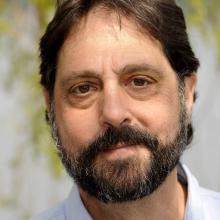
Research Professor
Not accepting new graduate students
Fields of Interest
Biography
Curriculum Vitae
(179.61 KB)
-
Career Development Award, H.F. Guggenheim Foundation, 1984Research Development Award, Smithsonian Institution, 1989Endowed Chair in Conservation Biology, University of Washington, 2001Environmental Leadership Award, Alberta Emerald Foundation, 2014Elephant Hero Award, National Geographic Society, 2015Grand Prize, Wildlife Crime Tech Challenge, USAID, 2016Albert Schweitzer Award for Animal Welfare, Animal Welfare Institute, 2018Trade, Fraud Enforecement Award, Homeland Security Investigations, 2020Lowell Thomas Award for Conservation Genetics, Explorer's Club, 2022
-
Selected Research
- Kuhner, MK, KS Gobush, Z Kaliszewska, R Horowitz, SK Wasser. 2025. Distribution of African savanna elephants (Loxodonta africana), African forest elephants (L. Cyclotis), and their hybrids across Africa based on genetic evidence. Global Ecology and Conservation 59:e03530.
- Wasser, SK, CJ Wolock, MK Kuhner, JE Brown, C Morris, RY Horowitz, A Wong, CJ Fernandez, MY Otiende, Y Hoareau, ZA Kaliszewska, E Jeon, BS Weir. 2022. Elephant genotypes reveal the size and connectivity of transnational ivory traffickers. Nature Human Behaviour : 6: 371-382.
- Wasser, SK, A Torkelson, M Winters, Y Horeaux, S Tucker, MY Otiende, FAT Sitam, J Buckleton, BS Weir. 2018, Combating transnational organized crime by linking multiple large ivory seizures to the same dealer Science Advances 4: eaat0625.
- Persistent Organic Pollutant Determination in Killer Whale Scat Samples: Optimization of a Gas Chromatography/Mass Spectrometry Method and Application to Field Samples, Wasser Samuel K, Lundin Jessica I, Dills RL, Ylitalo Gina M, Bradley Hanson M, Emmons Candice K, Schorr GS, Hempelmann Jennifer A, and Parson Kim M, Arch Environ Contam Toxicol , Volume DOI 10.1007/s00244-015-0218-8 (2015)
- Polycyclic aromatic hydrocarbons in caribou, moose, and wolf scat samples from three areas of the Alberta oil sands, Wasser Samuel K, Lundin Jessica I, and Riffell Jefferey A, Environmental Polution, Volume 206, p.527-534 (2015)
- Genetic assignment of large seizures of elephant ivory reveals Africa’s major poaching hotspots., Wasser Samuel K, Mailand Celia, Lisa Brown, Mondol Samrat, Clark William, Laurie Cathy, and Weir Bruce S, Science, 07/2015, Volume 349, p.84-87 (2015)
- Physiological implications of landscape use by free-ranging maned wolves in Brazil, Wasser S K, Vynne CR, and Booth RK, Journal of Mammology, Volume 95, Issue 4 (2014)
- Male biased sex ratio of poached elephants is negatively related to paching intensity, Wasser S K, Mondol S, and Mailand CR, Conservation Genetics, 2014, Volume DOI 10.1007/s10592-04-0603-2 (2014)
- Quantifying past and present connectivity illuminates a rapidly changing landscape for the African elephant, Wasser S K, Epps CW, Keim JL, Mutayoba BK, and Brashares JS, Molecular Ecology, 2013, Volume 22, p.1574-1588 (2013)
- Effects of exposure, diet, and thermoregulation on fecal glucocorticoid measures in wild bears, Wasser S K, Stetz J, Hunt K, and Kendall KC, PLoS One, 2013, Volume 8, Issue 2 (2013)
- Distinguishing the impacts of inadequate prey and vessel traffic on an endangered killer whale population, Wasser S K, Booth RK, Ayres KL, Hempelmann JA, Koski KL, Emmons CK, Baird RW, Balcomb-Bartok K, Hanson HB, and Ford MJ, PLoS One, Volume 7, Issue 6, p.e36842 (2012)
- Evidence that ship noise increase stress in right whales, Wasser S K, Hunt K, Rolland RM, PArks SE, Castellote M, Corkerson PJ, Nowacek DP, and Kruase SD, Proceedings Royal Society B< Biological Sciences, Volume 279, p.2363-2368 (2012)
- Using detection dogs to conduct simultaneously surveys of northern spotted and barred owls, Wasser S K, Booth RK, Hayward LS, Hartman J, Broms K, Berg J, Seely E, Lewis L, and Smih H, PLoS One, Volume 7, Issue 8, p.e42892 (2012)
- Combating the illegal trade in African elephant ivory with DNA forensics, Wasser Samuel K, Clark William Joseph, Drori Ofir, Kisamo Emily Stephen, Mailand Celia, Mutayoba Benezeth, and Stephens Matthew, Conservation Biology, 2008, Volume 22, Issue 4, p. - -1071 (2008)
- Using DNA to track the origin of the largest ivory seizure since the 1989 trade ban, Wasser Samuel K, Mailand Celia, Mutayoba Benezeth, Stephens Matthew, Booth Rebecca, Kisamo Emily, and Clark Bill, Proc Nat Acad Sci, 2007, Volume 104, Issue 10, p. - -4233 (2007)
- Scat detection dogs in wildlife research and management: application to grizzly and black bears in the Yellowhead Ecosystem, Alberta, Canada, Wasser S K, Davenport B, Ramage E R, Hunt K E, Parker M, Clarke C, and Stenhouse G, Canadian Journal Of Zoology-Revue Canadienne De Zoologie, 2004, Volume 82, Issue 3, p. - -492 (2004)
- A generalized fecal glucocorticoid assay for use in a diverse array of nondomestic mammalian and avian species, Hunt Kathleen E, Wasser Samuel K, Millspaugh Joshua J, Brown Janine L, Cooper Kathy, Crockett Carolyn M, Bechert Ursula, Larson Shawn, and Monfort Steven L, General and Comparative Endocrinology, 2000, Volume 120, Issue 3, p. - -275 (2000)
- Noninvasive physiological measures of disturbance in the northern spotted owl, Wasser Samuel K, Bevis Kenneth, King Gina, and Hanson Eric, Conservation Biology, 1997, Volume 11, Issue 4, p. - -1022 (1997)
- Reproductive control in wild baboons measured by fecal steroids, Wasser Samuel K, Biology of Reproduction, 1996, Volume 55, Issue 2, p. - -399 (1996)
-
Spring 2026
Winter 2026
Autumn 2025
Spring 2025
Winter 2025
Autumn 2024
Spring 2024
Winter 2024
Autumn 2023
Spring 2023
Winter 2023
-