
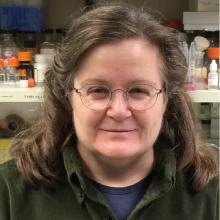
Affiliate Professor
Accepting new graduate students
Fields of Interest
Biography
Mechanisms of wound repair, cytoskeletal dynamics, and nuclear architecture in
Drosophila
A hallmark of many diseases and cancers is a dysfunctional cytoskeleton. A properly functioning cytoskeleton is needed for a wide variety of cellular events ranging from cell shape to cell signaling and migration/metastasis. We use state-of-the-art developmental, genetic, cell, molecular, and high-resolution imaging approaches to study these dynamic structural elements in various developmental processes. Our current efforts are divided between studies of: (1) molecular and cellular mechanisms of cell wound repair; (2) nuclear architecture and organization; and (3) cytoskeleton dynamics mediated by the Rho1 small GTPase and its downstream effectors. Our goal is to understand the role of these elements in regulating normal developmental events and how this regulation goes awry in diseases/cancers, thereby providing new avenues for possible therapeutic targets or to enhance the effectiveness of existing treatment modalities.
Mechanisms of cell wound repair. Whenever an organism sustains an injury, either to single cells or to a tissue, it must act quickly to repair the wound in order to prevent cell death, loss of tissue integrity, and invasion by microorganisms. We use Drosophila as a genetically tractable model to dissect the molecular and cellular mechanisms of cell wound repair. By analyzing the effects of perturbations on and the dynamic expression of actin, myosin, microtubules, E-cadherin, and plasma membrane, we have defined distinct phases within the wound repair process and identified specific components required during each phase. In particular, we find that E-cadherin accumulates at the wound edge during single cell repair and wound expansion is excessive in E-cadherin mutants, indicating a role for E-cadherin in anchoring the actomyosin ring to the plasma membrane. To examine the signals that trigger wound repair and control the cytoskeleton changes, we investigated the role of the Rho family of small GTPases and their regulators in this repair process. We find that Rho family GTPases, RhoGEFs, RhoGAPs, and Annexins accumulate at the wound edge in single cells, but with different spatial and temporal distributions. We are currently using a genetic approach to identify new components/machineries of repair and to define then characterize the regulatory mechanism(s)/pathways underlying both types of wound repair, as well as the crosstalk between them.
Nuclear Architecture and Organization. The cytoplasmic functions of Wiskott-Aldrich Syndrome family (WAS) proteins are well known and include roles in cytoskeleton reorganization and membrane-cytoskeletal. interactions important for membrane/vesicle trafficking, morphogenesis, and the immune response Mis-regulation of these proteins is associated with immune deficiency, neurodegeneration, and metastasis. We identified WASH as a new member of the WAS family with critical cytoplasmic roles in early Drosophila development. Interestingly, we find that WASH is also present in the nucleus where it interacts directly with B-type lamins, and when mutant affects global nuclear organization/functions, as well as exhibits an abnormal wrinkled nucleus morphology reminiscent of that observed in diverse laminopathies. We also find that WASH, its four subunit regulatory complex (SHRC), capping protein, and Arp2/3 are required for the physical aspects of Nuclear Envelope (NE-) bud formation—a Nuclear Pore-independent mechanism wherein large macromolecular complexes are packaged inside the nucleus and extruded through the nuclear membranes. We are currently identifying WASH nuclear complexes by mass spec analysis, as well as using a combination of comparative bioinformatic, proteomic, cell biological, and high-resolution microscopy approaches to investigate the effect of WASH on nuclear processes, architecture, and organization.
Cytoskeletal Regulation by Rho GTPase and its Downstream Effectors. Rho GTPases play a central role in diverse biological processes including reorganization of the actin cytoskeleton (cell shape changes, polarity, adhesion, migration, and cytokinesis), microtubule dynamics, changes in gene transcription, axonal guidance, oncogenic transformation, and wound repair. Rho GTPases are also the targets of different pathogens in disease-causing bacterial/viral infections. We have found that Drosophila Rho1 is required for maintenance of proper actin and microtubule architecture/dynamics. We have been characterizing three of its downstream effectors: the de novo linear actin nucleation factors Capu (a formin-homology protein) and Spire (a WH2 domain protein), and WASH, a WAS family protein that activates the Arp2/3 complex to nucleate branched actin filaments and functions to remodel actin structures. Our results suggest that Wash is a link between branched actin filaments (associated with Arp2/3) and linear actin filaments (associated with formins and Spire proteins). We are currently exploring how Wash, Spire, and Capu work in the cytoplasm to coordinate actin and microtubule cytoskeleton dynamics required for different developmental events. Our current efforts are focused on identifying and analyzing the components, pathways, and regulatory mechanism(s) underlying these roles.
1982 - BA, Johns Hopkins University
1985 - PhD, Johns Hopkins University
1986 - Postdoc, Imperial Cancer Research Fund (Oxford UK)
1990 - Postdoc, California Institute of Technology
-
Selected Research
- UpSET recruits HDAC complexes and restricts chromatin accessibility and acetylation at promoter regions., Delrow Jeffrey J, Parkhurst Susan M, Rincon-Arano Hector, Halow Jessica, and Groudine Mark, Cell, 2012 Dec 7, Volume 151, Issue 6, p.1214-28 (2012)
- Drosophila embryos close epithelial wounds using a combination of cellular protrusions and an actomyosin purse string., Parkhurst Susan M, Abreu-Blanco Maria Teresa, Verboon Jeffrey M, Watts James J, and Liu Raymond, Journal of cell science, 2012 Dec 15, Volume 125, Issue Pt 24, p.5984-97 (2012)
- Cytoskeleton responses in wound repair., Parkhurst Susan M, Abreu-Blanco Maria Teresa, Verboon Jeffrey M, and Watts James J, Cellular and molecular life sciences : CMLS, 2012 Aug, Volume 69, Issue 15, p.2469-83 (2012)
- Developmental expression of Drosophila Wiskott-Aldrich Syndrome family proteins., Parkhurst Susan M, Abreu-Blanco Maria Teresa, Rodriguez-Mesa Evelyn, and Rosales-Nieves Alicia E, Developmental dynamics : an official publication of the American Association of Anatomists, 2012 Mar, Volume 241, Issue 3, p.608-26 (2012)
- Single cell wound repair: Dealing with life's little traumas., Parkhurst Susan M, Abreu-Blanco Maria Teresa, and Verboon Jeffrey M, Bioarchitecture, 2011 5, Volume 1, Issue 3, p.114-121 (2011)
- Cell wound repair in Drosophila occurs through three distinct phases of membrane and cytoskeletal remodeling., Parkhurst Susan M, Abreu-Blanco Maria Teresa, and Verboon Jeffrey M, The Journal of cell biology, 2011 May 2, Volume 193, Issue 3, p.455-64 (2011)
- The Drosophila STUbL protein Degringolade limits HES functions during embryogenesis., Abed Mona, Barry Kevin C, Kenyagin Dorit, Parkhurst Susan M, Orian Amir, Werwie Timothy R, and Boico Olga, Development (Cambridge, England), 2011 May, Volume 138, Issue 9, p.1759-69 (2011)
- Degringolade, a SUMO-targeted ubiquitin ligase, inhibits Hairy/Groucho-mediated repression., Abed Mona, Barry Kevin C, Kenyagin Dorit, Koltun Bella, Phippen Taryn M, Delrow Jeffrey J, Parkhurst Susan M, and Orian Amir, The EMBO journal, 2011 Apr 6, Volume 30, Issue 7, p.1289-301 (2011)
- Formins in development: orchestrating body plan origami, Liu R, Linardopoulou E V, Osborn G E, and Parkhurst S M, Biochim Biophys Acta, 2010, Volume 1803, Issue 2, p.207-25 (2010)
- Wash functions downstream of Rho and links linear and branched actin nucleation factors, Liu R, Linardopoulou E V, Osborn G E, Parkhurst S M, Abreu-Blanco M T, and Barry K C, Development, 2009, Volume 136, Issue 16, p.2849-60 (2009)
- Sisyphus, the Drosophila myosin XV homolog, traffics within filopodia transporting key sensory and adhesion cargos, Liu R, Parkhurst S M, Woolner S, Johndrow J E, Metzger D, and Flores A, Development, 2008, Volume 135, Issue 1, p.53-63 (2008)
- A Myc-Groucho complex integrates EGF and Notch signaling to regulate neural development, Parkhurst S M, Metzger D, Orian A, Delrow J J, Rosales Nieves A E, Abed M, Paroush Z, and Eisenman R N, Proc Natl Acad Sci U S A, 2007, Volume 104, Issue 40, p.15771-6 (2007)
- Human subtelomeric WASH genes encode a new subclass of the WASP family, Linardopoulou E V, Osborn G E, Parkhurst S M, Parghi S S, Friedman C, and Trask B J, PLoS Genet, 2007, Volume 3, Issue 12, p.e237 (2007)
- Coordination of microtubule and microfilament dynamics by Drosophila Rho1, Spire and Cappuccino, Parkhurst S M, Johndrow J E, Rosales-Nieves A E, Keller L C, Magie C R, and Pinto-Santini D M, Nat Cell Biol, 2006, Volume 8, Issue 4, p.367-76 (2006)
- Rho1 regulates signaling events required for proper Drosophila embryonic development, Parkhurst S M and Magie C R, Dev Biol, 2005, Volume 278, Issue 1, p.144-54 (2005)
- Parallels between tissue repair and embryo morphogenesis, Parkhurst S M and Martin P, Development, 2004, Volume 131, Issue 13, p.3021-34 (2004)
- Hairy transcriptional repression targets and cofactor recruitment in Drosophila, Parkhurst S M, Orian A, Delrow J J, Rosales-Nieves A E, Bianchi-Frias D, and Vazquez J, PLoS Biol, 2004, Volume 2, Issue 7, p.E178 (2004)
-