
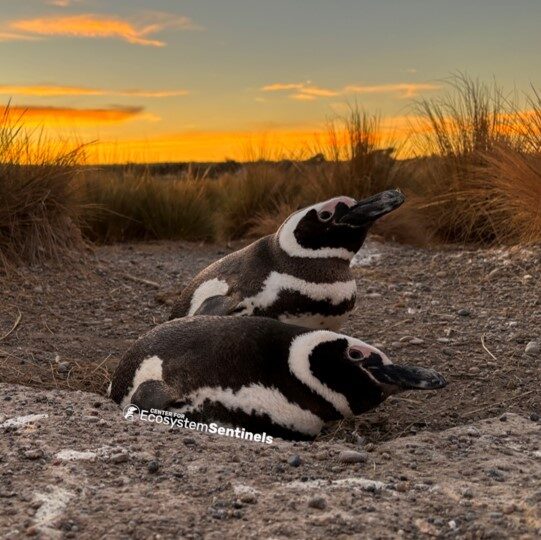
Animals can change their behavior to survive in environments that are constantly changing, a skill known as behavioral plasticity. Scientists have suggested that some animals might show “plasticity syndromes,” meaning they are flexible in many behaviors at the same time. Plasticity syndromes in wild vertebrates could help them respond better to change. To test this idea, researchers studied Magellanic penguins using data collected over 40 years. They found that some behaviors changed together in positive ways, while others were linked in negative ways, and overall flexibility did not strongly affect how many offspring penguins produced over their lifetime. Being flexible helped penguins during unusually productive ocean conditions, but reduced success during average conditions. Flexibility did not help during poor conditions. In conclusion, flexibility can be helpful or harmful depending on the environment.
Johansson, E., Boersma, P.D., Jones, T. & Abrahms, B. (2024) Plasticity syndromes in wild vertebrates: Patterns and consequences of individual variation in plasticity across multiple behaviours. Ecology Letters, 27, e14473. https://doi.org/10.1111/ele.14473