
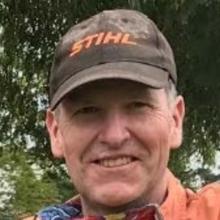
Teaching Professor Emeritus
Fields of Interest
Biography
My research interests center on the impact of active learning strategies and high-structure course designs on student performance in college science courses and phylogenetic analyses of change in blackbird morphology.
I am currently working with colleagues in the University of Washington's Department of Biology to determine whether certain types of course designs have a positive impact on achievement by underrepresented minority and economically disadvantaged students. This study is part of a broader effort to evaluate the role of active learning in improving the quality of science education. I also have projects underway to:
1) evaluate hypotheses on the most effective ways to mitigate the pattern of underperformance often observed for women taking undergraduate STEM courses;
2) design a course-based undergraduate research experience (CURE) focused on experimental evolutionary studies of antibiotic resistance in E. coli;
3) meta-analyze the STEM education literature to compare the performance of at-risk students in a traditional lecture versus active learning setting supported by high-structure courseware;
4) design a companion course to support the success of underprepared, at-risk students in general chemistry.
I am also interested in the evolution of body size, body shape, beak characteristics, coloration, sexual dichromatism, and sexual dimorphism in the blackbirds native to North and South America. The 80+ species in this lineage vary in size from 7 gr to over 200 gr, occupy habitats from boreal marshes to tropical rainforests, and exhibit breeding systems ranging from coloniality to polygyny to obligate nest parasitism.
Scott Freeman grew up in Wisconsin and received a B.A. in Biology from Carleton College in 1978. After working in environmental education and international conservation for six years, he did graduate work at the University of Washington on the molecular systematics and morphological evolution of blackbirds and received a PhD in zoology in 1991. He had a Sloan Fellowship to support a post-doctoral fellowship in molecular evolution at Princeton University, then returned to the University of Washington as Director of Public Programs at the Burke Museum. Since the mid-1990s his focus has been on textbook writing and teaching. He co-authored Evolutionary Analysis and was sole author of Biological Science, each through four editions; both texts are in their 5th edition. He is currently Principal Lecturer in Biology at the UW, where he teaches introductory and upper-division courses and conducts research on how active learning techniques impact student performance. He is a recipient of a UW Distinguished Teaching Award.
-
Selected Research
- Nationally endorsed learning objectives to improve course design in introductory biology, Freeman Scott and Hennessey Kelly M, PLOS ONE, 08/2024 (2024)
- Crowdsourced Data Indicate Widespread Multidrug Resistance in Skin Flora of Healthy Young Adults †, Fang Ferric C., Gast Christopher M., Koval Mikhail, Harrington Robert D., Freeman Scott, Parks John W., Okoroafor Nnadozie O., Nowowiejski David, and Connor Eileen ’, Journal of Microbiology & Biology Education, 01/2016, Volume 17, Issue 1, p.172 - 182 (2016)
- Women learn more from local than global examples of the biological impacts of climate change, Jenkins E.T., Crowe A., HilleRisLambers J., Wenderoth M.P., and Freeman S., Frontiers in Ecology, 2015, Volume 13, Issue 3 (2015)
- Women learn more from local than global examples of the biological impacts of climate change, HilleRisLambers J, Wenderoth M P, Crowe A J, Freeman S, and Theobald E J, Frontiers Ecol Env, 04/2015, Volume 13, Issue 3 (2015)
- Active learning increases student performance in science, engineering, and mathematics, Wenderoth Mary Pat, Smith Michelle K, McDonough Miles, Jordt Hannah, Freeman Scott, Eddy Sarah L, and Okoroafor Nnadozie, Proceedings of the National Academy of Sciences, Volume 111, p.8410–8415 (2014)
- Active learning improves student performance in science, engineering, and mathematics, Wenderoth Mary Pat, Smith Michelle K, Freeman Scott R, Eddy Sarah L, McDonough Miles, Okoroafor Ndozie, and Jordt Hannah, Proceedings of the National Academy of Sciences, 05/2014, Volume 111, Issue 23 (2014)
- Is it the intervention or the students? Using regression to control for student characteristics in undergraduate STEM education research, Freeman S and Theobald R, CBE-LSE, 03/2014, Volume 13, p.41-48 (2014)
- BioCore guide: A tool for interpreting the core concepts of Vision and Change for biology majors, Wenderoth M P, Crowe A J, Freeman S, and Brownell, S.E., CBE-LSE, 06/2014, Volume 13 (2014)
- BioCore Guide: A tool for interpreting the core concepts of Vision and Change for biology majors, Wenderoth M P, Crowe A J, Freeman S, and Brownell S E, CBE-Life Science Education, summer 2014, Volume 13 (2014)
- End of lecture: Active learning increases student performance across STEM disciplines., Eddy S, Wenderoth M P, Freeman S, McDonough M, Smith M, Okoroafor N, and Jordt H, PNAS, May 12, 2014, Issue early edition (2014)
- BioCore Guide: A tool for interpreting the core concepts of Vision and Change for biology majors, Crowe Alison J, Wenderoth Mary Pat, Brownell Sara E, and Freeman Scott, CBE-LSE, Volume 13 (2014)
- How Students Think about Experimental Design: Novel Conceptions Revealed by in-Class Activities, Crowe Alison J, Wenderoth Mary Pat, Brownell Sara E, Theobald Roddy, Okoroafor Nnadozie, Koval Mikhail, Freeman Scott, and Walcher-Chevillet Cristina L, BioScience, 02/2014, Volume 64, Issue 2 (2014)
- How should we teach tree thinking? An experimental test of two hypotheses, Wenderoth M P, Crowe A J, Freeman S, and Eddy S L, Evolution: Education and Outreach, Volume 6 (2013)
- How students think about experimental design: novel conceptions revealed by in-class activities, Wenderoth M P, Crowe A J, Freeman S, Okoroafor N, Brownell S E, Theobald R, Koval M, and Walcher-Chevillet C L, Bioscience, Volume 64, Issue 2, p.125-137 (2013)
- How should we teach tree-thinking? An experimental test of two hypotheses, Eddy S, Wenderoth M P, Crowe A J, and Freeman S, Evolution: Education and Outreach, Volume 6, p.13 (2013)
- Increased Structure and Active Learning Reduce the Achievement Gap in Introductory Biology, HilleRisLambers J, Freeman S, Haak D. C., and Pitre E., Science, 03/2011, Volume 332, Issue 6034, p.1213 - 1216 (2011)
-